Tuesday, March 23, 2010

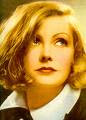
Joan Crawford

Joan Crawford starred in more than 100 films during her 45 year career. From silent films to box office queen to box office poision to Academy Award winner, Joan Crawford was of our most talented and top female actresses of the silver screen.


Joan Crawford was born Lucille Fay LeSueur on March 23, 1905 in San Antonio, Texas, the third child of Thomas E. LeSueur and Anna Bell Johnson.

As a child, she was nicknamed "Billie." She loved watching vaudeville acts and desired to become a professional dancer.


Under the name Lucille LeSueur, Joan Crawford began dancing in the choruses of traveling revues and was spotted dancing in Detroit by producer Jacob J. Shubert.

Jacob Shubert put her in the chorus line for his 1924 show Innocent Eyes at the Winter Garden Theatre on Broadway in New York City. She was next cast in the Broadway show The Passing Show of 1924.


In 1925, as Lucille LeSueur, her first film was Pretty Ladies in 1925, which starred ZaSu Pitts.

MGM publicity head Pete Smith recognized her ability but felt that her name sounded fake. Smith organized a contest in conjunction with a fan magazine named Movie Weekly to allow readers to select her new name. Joan Crawford was born.

Joan Crawford appeared in more than 30 silent films. Her first credited role was in Sally, Irene and Mary (1925) in which she played Irene, a struggling chorus girl. However, it was her role as Diana Medford in Our Dancing Daughters (1928) that catapulted her to stardom. The role established her as a symbol of modern 1920s-style femininity.

Joan Crawford also appeared in silent films such as The Merry Widow (1925), Old Clothes (1925), Tramp, Tramp, Tramp (1926), The Taxi Dancer (1927) and The Unknown (1927).


In 1929, Joan Crawford appeared in The Hollywood Revue of 1929 (1929) which was the first audible tap dance on the screen.

In 1929, Joan Crawford and Robert Montgomery starred in Untamed, her first talkie.

From 1929 to 1938, Joan Crawford was one of the leading female stars of film. In 1937 she was named First Queen of the Movies.

During this period her films included Possessed (1931), Grand Hotel (1932), Rain (1932), Dancing Lady (1932), Sadie McKee (1934), No More Ladies (1935), Love on the Run (1936), The Last of Mrs. Cheyney (1937), and The Bride Wore Red (1937).

In 1938 the Independent Film Journal named her and several other stars (like Katharine Hepburn) as "box office poison" based on their supposed lack of popular appeal.

Joan Crawford quickly overcame this label of "box office poison." In 1939, Joan Crawford made a comeback with her role as home-wrecker Crystal Allen in director George Cukor's comedy The Women. She also broke from the label by taking the unglamorous role of Julie in Strange Cargo (1940). Joan Crawford then starred as a facially disfigured blackmailer in A Woman's Face (1941). While the film was only a moderate box office success, her performance was hailed by many critics.

In 1945, Joan Crawford starred in Mildred Pierce, earning her first Academy Award Nomination for Best Actress and her one and only Academy Award.


After Mildred Pierce, Joan Crawford was nominated for an Academy Award for Best Actress for Possessed (1947) and Sudden Fear (1952).

During the 1940s and 1950s, Joan Crawford appeared in films such as Humoresque (1946), Daisy Kenyon (1948), Flamingo Road (1949), Johnny Guitar (1952), Autumn Leaves (1956), and The Best of Everything (1959).


In 1962, Joan Crawford starred with long time enemy Bette Davis in What Ever Happened to Baby Jane. They would appear together in Hush, Hush Sweet Charlotte in 1964.


In 1970, Crawford was presented with the Cecil B. DeMille Award.

Joan Crawford has a star on the Hollywood Walk of Fame for motion pictures.


During World War II, Joan Crawford was active on the home front. She founded a group called America's Women's Volunteer Services which took care of children whose mothers worked in the defense factories. She also raised money to train dogs for the armed forces. She donated her entire salary from They All Kissed the Bride (1942) to the Red Cross who found Carole Lombard's body (Joan took over Carole's role after she was killed). She raised money to buy food and cots for the children left homelesss by the air raids in England. She nitted socks and scarves for soliders.

Joan Crawford was so dedicated to her fans that she always personally responded to her fan mail by typing them responses on blue paper and autographing it. A great deal of her spare time and weekends were spent doing this.


Joan Crawford died on May 10, 1977.


In November 1978, a year and a half after Joan Crawford's death, Christina published an exposé titled Mommie Dearest which contained allegations that Crawford was emotionally and physically abusive to her and her brother Christopher.

Many of Joan Crawford's friends and co-workers, including Van Johnson, Ann Blyth, Marlene Dietrich, Barbara Stanwyck, George Cukor, Robert Young, Myrna Loy, Cesar Romero and many others (including Joan Crawford's other daughters, Cathy and Cindy) denounced the book, categorically denying any abuse. An Add taken out in Variety magazine by her friends stated it was "A Disgusting Portrait of one of Hollywood's Most Generous and Most Talented People."

Although most of Hollywood stated that Mommie Dearest was fiction and revenge by Christina Crawford (who had been cut from her mother's will), some of Hollywood stated there were many truths in the book. For example, Bette Davis and Betty Hutton.

The saddest part of Mommie Dearest, is Joan Crawford never had the opportunity to defend the book. We never hear Joan's side. However, her children Cathy and Cindy and now her grandson Casey speak in support of Joan Crawford.

Unfortunately a younger generation only knows Joan Crawford as Mommie Dearest. Whether Mommie Dearest is true, false or partly true, nothing will ever change the fact that Joan Crawford was one of our most talented actresses whose films are worth watching. She was an actress with spunk and drive who provided audiences with memorable performances for over 45 years.

Saturday, March 20, 2010

Edgar Buchanan

Edgar Buchanan was one of the most popular character actors of the 1940s, 1950s, 1960s and 1970s.


Edgar Buchanan was born William Edgar Buchanan on March 20, 1903 in Humansville, Missouri. At the age of 7, he moved with his family to Oregon.

Like his father, Edgar Buchanan became a successful dentist. While in dental school, Edgar Buchanan met Mildred Marguerite Spence. The two married on April 14, 1928.

Edgar Buchanan graduated from North Pacific Dental College. From 1929 to 1939 he practiced oral surgery in Eugene, Oregon with his wife. They moved his practice to Altadena, California in 1939.

Edgar Buchanan joined the Pasadena Playhouse as an actor. He appeared in his first film in 1939, My Son Is Guilty at the age of thirty-six, after which he turned his dentistry practice over to his wife.

Edgar Buchanan appeared in more than 100 movies working along side John Wayne, Jean Arthur, Cary Grant, Katharine Hepburn, Spencer Tracy, Alan Ladd, Myrna Loy, William Holden and Barbara Stanwyck.

He appeared in films such as Too Many Husbands (1940), The Sea Hawk (1940), Penny Serenade (1941), You Belong to Me (1941), The Talk of the Town (1942), The Sea of Grass (1947), Cheaper by the Dozen (1950), Shane (1953), Wichita (1955), Donovan's Reef (1963) and McLintock! (1963).


Edgar Buchanan most frequently appeared along side Glenn Ford. They made 12 films together: My Son Is Guilty (1939), Arizona (1940), Texas (1941), The Desperadoes (1943), Destroyer (1943), Framed (1947), The Man from Colorado (1948), Lust for Gold (1949), Human Desire (1954), The Sheepman (1958), It Started with a Kiss (1959)
Cimarron (1960) and The Rounders (1965).

From 1971 to 1972, Edgar Buchanan (J.J. Jackson) and Glenn Ford (Sam Cade) starred in the television show Cade's County.


From 1952 to 1954, Edgar Buchanan played Red Connors in the television show Hopalong Cassidy.

From 1956 to 1957, Edgar Buchanan was Judge Roy Bean in the television show Judge Roy Bean.


In 1963, Edgar Buchanan was cast in the role he is most famous for: Uncle Joe on the hit sitcom Petticoat Junction. He would play Uncle Joe in 222 episodes from 1963 to 1970. He would also play Uncle Joe in guest appearances on Green Acres and The Beverely Hillbillies.


Edgar Buchanan made his final appearance in the 1974 film Benji with his Petticoat Junction co-star Higgins. Higgins had a close rapport with the actor Edgar Buchanan. The two actors had an obvious fondness for one another, which is especially clear in Benji.


Edgar Buchanan died on April 4, 1979 due to complications of a stroke.

Sunday, February 14, 2010

Claire Bloom

Claire Bloom was born Patricia Claire Blume on February 15, 1931 in London, England. She is the daughter of Elizabeth Grew and Edward Max Blume.


Claire Bloom began her training at the Guildhall School of Music & Drama and the Central School of Speech and Drama.

Claire Bloom made her debut on BBC radio programmes. She made her stage debut in 1946, when she was 15, with the Oxford Repertory Theatre. Her London stage debut was in 1947 in the hit Christopher Fry play The Lady's Not For Burning.


Claire Bloom made her film debut in The Blind Goddess (1948).

In 1951, she was chosen by Charlie Chaplin to appear in his film Limelight. She received excellent reviews for her performance and this role made her a star.


Claire Bloom appeared in The Man Between (1953), Richard III (1955), Alexander the Great (1956), The Brothers Karamazov (1958), The Buccaneer (1958), The Wonderful World of the Brothers Grimm (1962), The Spy Who Came in from the Cold (1965), and Crimes and Misdemeanors (1989).


In 1981, she provided the voice of Beauty in Beauty and the Beast.

Claire Bloom's Broadway debut was in King Richard II. She also appeared in Electra, A Doll's House, Hedda Gabler, and Romeo and Juliet. She was nominated for a Tony for Electra. She has won two Drama Desk Awards.

Claire Bloom received an Emmy nomination for Outstanding Supporting Actress in a Limited Series or a Special for Brideshead Revisited (1981).

As with other maturing actress during the 1970s, Claire looked toward classy film roles in TV-movies like Backstairs at the White House (1979).

From 1993 to 1995, she played Orlena Grimaldi on the CBS soap opera As the World Turns.

Claire Bloom continues to appear in movies, television and on the stage. Her most recent role was on Doctor Who.

Friday, February 5, 2010

John Carradine

One of our most prolific character actor, during his 57 year career, John Carradine earned more than 300 film and television credits. It is dispute whether he or Donald Crisp appeared in more films than any other actor.


John Carradine was born Richmond Reed Carradine on February 5, 1906 in New York City, the son of of Genevieve Winifred, a surgeon, and William Reed Carradine, a correspondent for the Associated Press.

John Carradine made his film debut in 1930 in Bright Lights.

A favorite of director John Ford, John Carradine appeared in eleven of Ford's films: The Prisoner of Shark Island (1934), Mary of Scotland (1936), The Hurricane (1937) Submarine Patrol (1938), Four Men and a Prayer (1938), Stagecoach (1939), Drums Along the Mohawk (1939), The Grapes of Wrath (1940), The Last Hurrah (1958), The Man Who Shot Liberty Valance (1962) and Cheyenne Autumn (1964).


A few of John Carradine's most notable film credits include The Invisible Man (1933),Captains Courageous (1937), Jesse James (1939), The Three Musketeers (1939), The Hound of the Baskervilles (1939), Five Came Back (1939), The Return of Frank James (1940), Man Hunt (1941), The Adventures of Mark Twain (1944), The Court Jester (1955), The Ten Commandments (1956), and Around the World in Eighty Days (1956).


Four of John Carradine's five sons became actors: David Carradine, Robert Carradine, Keith Carradine, and Bruce Carradine.


John Carradine appeared in several episodes of Kung Fu with son David Carradine.

In The Long Riders (1981) he appeared with sons Keith, Robert and David.

John Carradine was known for playing dark evil sinister characters. However, in a very different role, John Carradine won a Daytime Emmy in 1985 for Outstanding Performer in a Children's Program for "Young People's Specials" for the episode "Umbrella Jack".

John Carradine also had a significant Broadway career. He made his Broadway debut in The Duchess of Malfi. His Broadway credits include Galileo, Volpone, Frankenstein, A Funny Thing Happened on the Way to the Forum, The Time of Your Life,
The Madwoman of Chaillot, The Leading Lady, and The Cup of Trembling.

For his contribution to the motion picture industry, John Carradine has a star on the Hollywood Walk of Fame.


In 2003, he was inducted into the Western Performers Hall of Fame at the National Cowboy & Western Heritage Museum in Oklahoma City, Oklahoma.


On November 27, 1988, John Carradine died of natural causes in Milan, Italy at age 82. His final words were: "Milan: What a beautiful place to die".

Friday, January 29, 2010

John Forsythe

John Forsythe was born John Lincoln Freund on January 29, 1918 in Penns Grove, New Jersey. The son of Samuel Jeremiah Freund, a stockbroker and Blance Materson. John grew up in Brooklyn, New York.


During World War II, John Forsythe served with the US Army Corps. During World War II he also worked with injured soldiers who had developed speech problems.


After World War II, he became a baseball announcer and a drama teacher. Joan Collins would co-star opposite him on Dynasty (1981), was one of his drama students.

In 1943, he signed a contract with Warner Brothers and made his film debut in Northern Pursuit (1943) and his second film was Destination Tokyo (1943). During the 1940s and 1950s he also appeared in The Captive City (1952), The Glass Web (1953), Escape from Fort Bravo (1953), The Trouble With Harry (1955), and The Ambassador's Daughter (1956).


During the 1950s, John Forsythe was a familiar face on television appearing in episodes of Robert Montgomery Presents, Suspense, Kraft Television Theater, and Studio One.

In 1957, John Forsythe was cast to play single father Bentley Gregg in the sitcom Bachelor Father. The show would run for 157 episodes and four seasons ending in 1962.


During the 1960s, John appeared in such films as Madame X (1966), In Cold Blood (1967) and Topaz (1969). He also frequently appeared on television, making appearances in Bob Hope Presents the Chrysler Theatre, The Dick Powell Show and The Alfred Hitchcock Hour.

In 1965, John Forsythe starred in the short lived The John Forsythe Show.

The 1970s brought John Forsythe one of his most famous roles, as the unseen millionaire Charles Townsend on the 1970s crime drama Charlie's Angels (1976–1981).


The 1980s brought John Forsythe another famous role, as patriarch Blake Carrington in Dynasty (1981-1989). This role would bring Forsythe three Emmy nominations for Outstanding Lead Actor in a Drama Series. He was also nominated six times for a Golden Globe for Best Actor in a Drama Series, winning in 1983 and 1984. In 1984, he also won a Soap Opera Digest Award for his performance as Blake Carrington.


During the 1990s, he appeared as Sen. William Franklin Powers in the short lived series The Powers That Be.

At age 82, he would once again play Charles Townsend in the movie Charlie's Angels (2000) and would reprise the role in Charlie's Angels: Full Throttle (2003).


John Forsythe owned and bred Thoroughbred racehorses for many years and was a member of the Board of Directors of Hollywood Park Racetrack. He was the recipient of the 1988 Eclipse Award of Merit for his contibution in promoting the sport of Thoroughbred racing.

John Forsythe has a star on the Hollywood Walk of Fame for television.

Saturday, January 23, 2010

Ernest Borgnine


Ernest Borgnine's career has spanned over five decades. He is known for his gruff, but gentle voice. At the age of 93, Ernest Borgnine is still active in both films and television.

Ernest Borgnine was born Ermes Effron Borgnine on January 24, 1917 in Hamden, Connecticut. The son of Charles Borgnine and Anna Boselli who had emigrated from Carpi (near Modena) Italy.

As an only child, Ernest enjoyed most sports, especially boxing, but took no real interest in acting. At 18, after graduating from high school in New Haven, and undecided about his future career, he joined the navy, where he stayed for ten years until leaving in 1945. During World War II he reached the rank of Gunner's Mate 1st Class. Ernest's military decorations included the American Campaign Medal, the Good Conduct Medal, the American Defense Service Medal with Fleet Clasp, and the World War II Victory Medal.

In 2004, Borgnine received the honorary rank of Chief Petty Officer from the Master Chief Petty Officer of the Navy Terry D. Scott—the US Navy's highest ranking enlisted sailor at the time—for Borgnine's support of the Navy and naval families worldwide.


After leaving the Navy, Ernest Borgnine worked a variety of factory jobs. His mother suggested that his forceful personality could make him suitable for a career in acting, and Borgnine promptly enrolled at the Randall School of Drama in Hartford. After completing the course he joined Robert Porterfield's famous Barter Theatre in Abingdon, Virginia, staying there for four years, undertaking odd jobs and playing every type of role imaginable.

Ernest Borgnine's big break came in 1949, when he made his acting debut on Broadway playing a male nurse in "Harvey".

In 1951 Ernest Borgnine moved to Los Angeles to pursue a movie career, and made his film debut as Bill Street in The Whistle at Eaton Falls (1951).

Ernest Borgnine's big movie break came when he was cast in the role of Sgt. "Fatso" Judson in From Here to Eternity (1953).


Ernest Borgnine's film credits include Johnny Guitar (1954), Vera Cruz (1954), Bad Day at Black Rock (1955), Marty (1955), The Last Command (1955), The Catered Affair (1956), The Badlanders (1958), Torpedo Run (1958), The Flight of the Phoenix (1965), The Dirty Dozen (1967), Ice Station Zebra (1968), The Wild Bunch (1969), The Revengers (1972), The Poseidon Adventure (1972), Law and Disorder (1974), Convoy (1978), Escape from New York (1981), Moving Target (1988), The Long Ride Home (2003) and Another Harvest Moon (2008).


Ernest Borgnine won the Academy Award for Best Actor and the Golden Globe for Best Actor for his performance in Marty (1955).

On television, he is best known for playing Quinton McHale in the 1962-66 series McHale's Navy and the mid 1980s action series Airwolf.


He also provided the voice of the character Mermaid Man in the series, SpongeBob SquarePants and the voice of Carface in All Dogs Go to Heaven.

He has also appeared on A Grandpa For Christmas, 7th Heaven, Touched by an Angel, Walker, Texas Ranger, JAG and Murder She Wrote.

In 2009, at the age of 92 he was nominated for an Emmy for Outstanding Guest Actor in a Drama Series for his performance on ER.

Ernest Borgnine was the very first "center square" on "The Hollywood Squares" (1965).

Ernest Borgnine is an active Freemason and is presently the Honorary Chairman of the Scottish Rite RiteCare Program, which sponsors 175 Scottish Rite Childhood Language Disorders Clinics, Centers, and Programs nationwide.


Ernest Borgnine has a Star on the Hollywood Walk of Fame for motion pictures.


Ernest Borgnine is still active and will be in two movies debuting in 2010: Red and Snatched.

Wednesday, January 6, 2010

Dead End Kids


In 1934, Sidney Kingsley wrote a play about a group of children growing up on the streets of New York City. A total of fourteen children were hired to play various roles in the play entitled Dead End. The play opened at the Belasco Theatre on October 28, 1935 and ran for two years, totalling 684 performances.

Samuel Goldwyn and director William Wyler saw the play and decided to turn it into a film. They paid $165,000 for the rights to the film and began auditioning actors in Los Angeles.

Failing to find actors that could convey the emotions they saw in the play, Goldwyn and Wyler hired six of the original Kids (Billy Halop, Bobby Jordan, Huntz Hall, Bernard Punsly, Gabriel Dell, and Leo Gorcey) to star in the film. The Kids were all signed to two-year contracts, allowing for possible future films, and began working on the 1937 United Artists' film, Dead End.

The Dead End Kids only made one movie for Goldwyn. During production, the boys ran wild around the studio, destroying property, including crashing a truck into a sound stage. Goldwyn chose not to use them again and sold their contract to Warner Brothers.


At Warner Brothers, the Dead End Kids made six films including Angels with Dirty Faces (1938). The last one was in 1939, when they were released from their contracts due to more antics on the studio lot.


The Dead End Kids proved to be so popular that they continued to make movies under various names, including The East Side Kids, The Little Tough Guys, and The Bowery Boys, until 1958.

In total, the various teams that made up 'The Dead End Kids' a total of 89 films and three serials for four different studios during their 21 year long film career.

The team was awarded a star on Hollywood's Walk of Fame for motion pictures in February, 1994. Sadly, only Bernard Punsly and Huntz Hall of the original Dead End Kids attended as they were the only surviving Dead End Kids.

The original Dead End Kids in the films were Billy Halop (Tommy), Bobby Jordan (Angel), Huntz Hall (Dippy), Bernard Punsly (Milty), Gabriel Dell (T.B.), and Leo Gorcey (Spit).

Billy Halop (Tommy) was born on February 11, 1920 and died on November 9, 1976. Billy Halop made 67 movies and television shows during his 38 year career. In his later years, he had a reoccurring role on All in the Family as Bert Munson.


Billy Halop's sister Florence Halop is most known for her role as Flo on the televsion sitcom Night Court.


Bobby Jordan (Angel) was the youngest Dead End Kid born on April 1, 1923. Bobby died on September 10, 1965. He appeared in 69 films and television shows from 1937 to 1961. Bobby's credits include Bonanza, Route 66, Maverick, and Treasure of Monte Cristo (1949).


Henry Richard "Huntz" Hall (Dippy) was born on August 15, 1919. Huntz died on January 30, 1999. He appeared in 116 films and television shows from 1937 to 1993. Huntz appeared on Different Strokes, Flipper, and Herbie Rides Again (1974).


Bernard Punsly (Milty) was born on July 11, 1923. Bernard retired in 1943 after making 19 films. He left show business and became a physician. When Huntz Hall died in 1999, Punsly became the last surviving cast member of the Dead End Kids.


Gabriel Dell (T.B.) was born on October 8, 1919 and died on July 3, 1988. He appeared in 81 films and television shows from 1937 to 1982. He went on to appear in Earthquake (1974), Barney Miller, Sanford and Son, and I Dream of Jeanie.


Leo B. Gorcey (Spit) was the oldest Dead End Kid born on June 3, 1917. He died on June 2, 1961. Leo appeared in 90 films and television shows from 1937 to 1966, including playing the First Cab Driver in It's a Mad Mad Mad Mad World (1963). He also appeared in Invisible Stripes (1939) and Docks of New York (1945). Leo's father was actor Bernard Gorcey. Leo's brother David Gorcey also became a Dead End Kid.